星期五, 10月 13, 2006

10-14-2006 不能上課者請簽名

I know some of you have to work in the office and keep making money.
I can understand you will have to absent from the class.
Just leave your name here at the comment.

10/14/2006 上課內容,請自學.有問題可隨時提出.

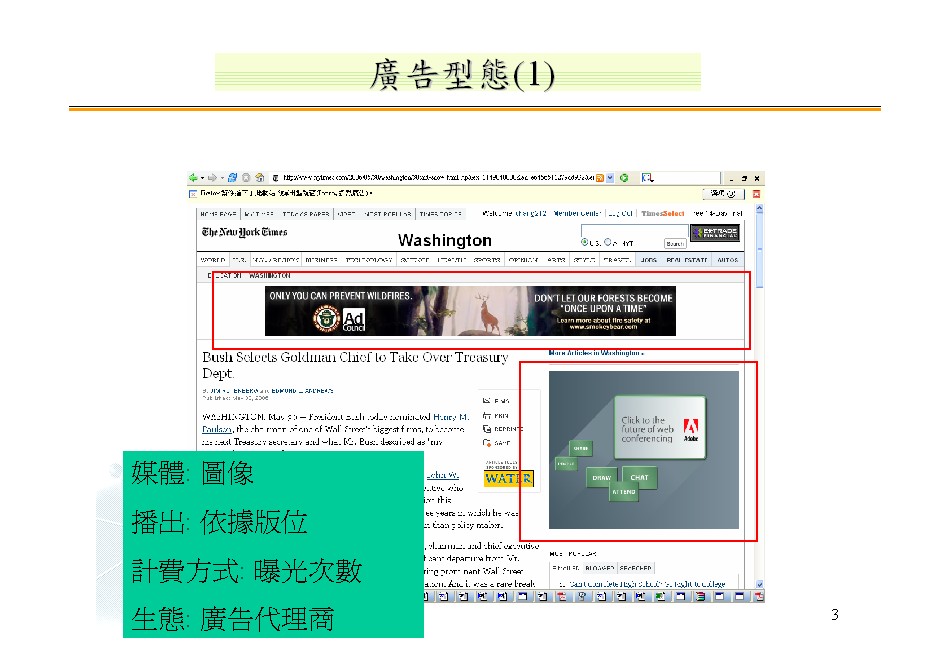
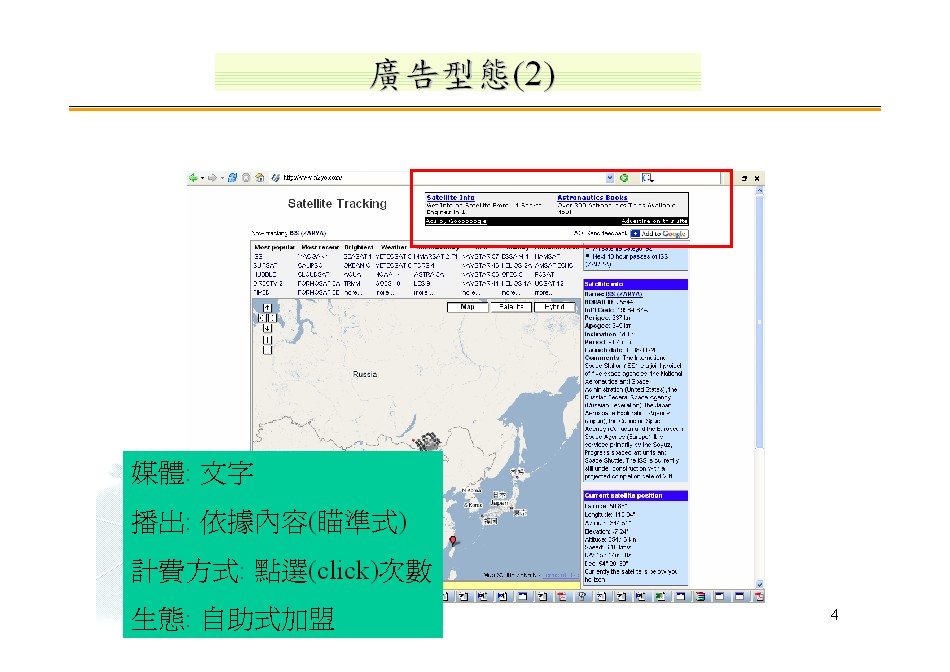
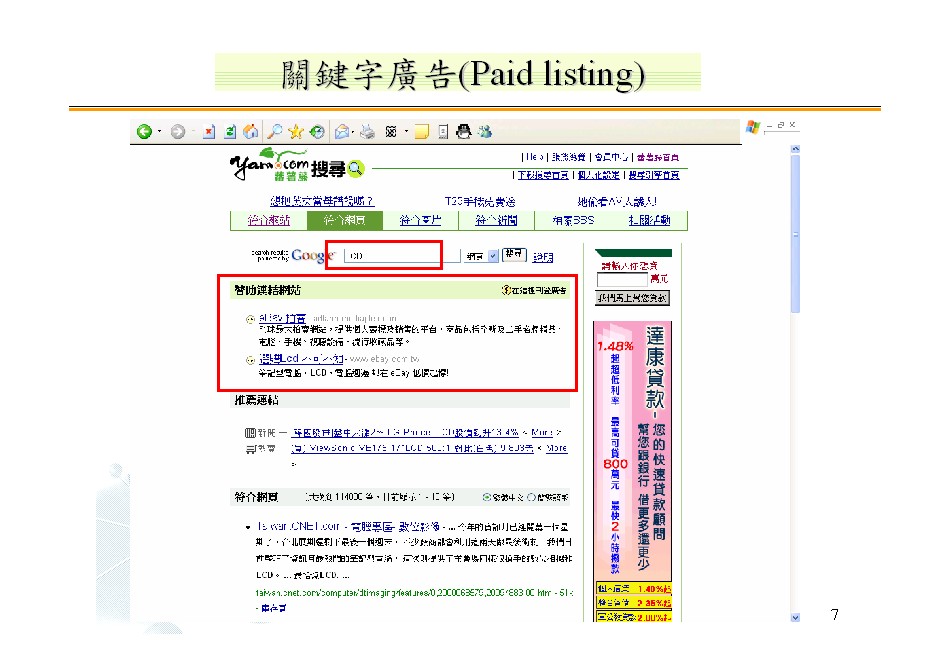
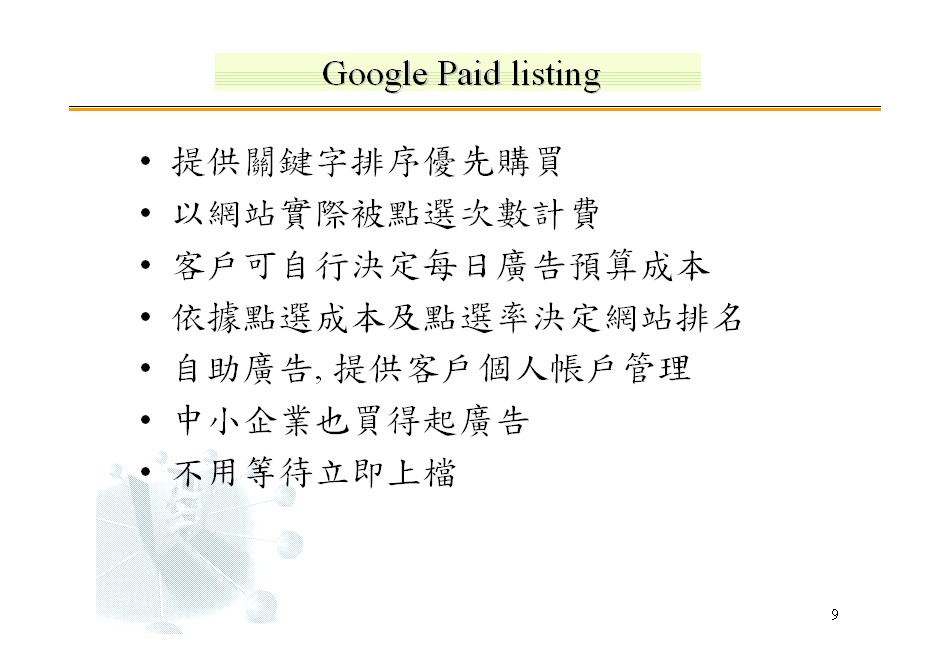
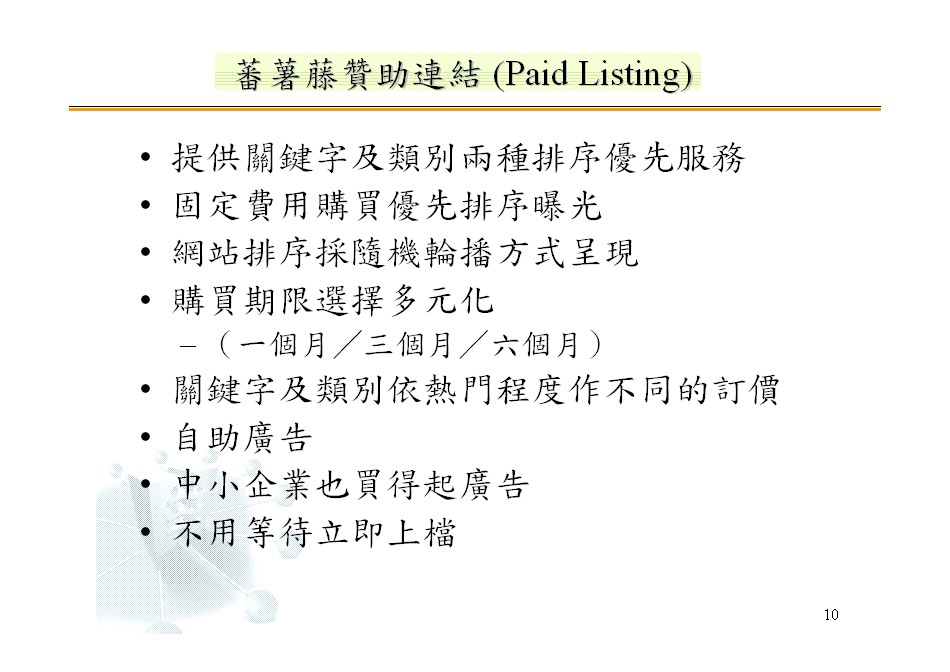
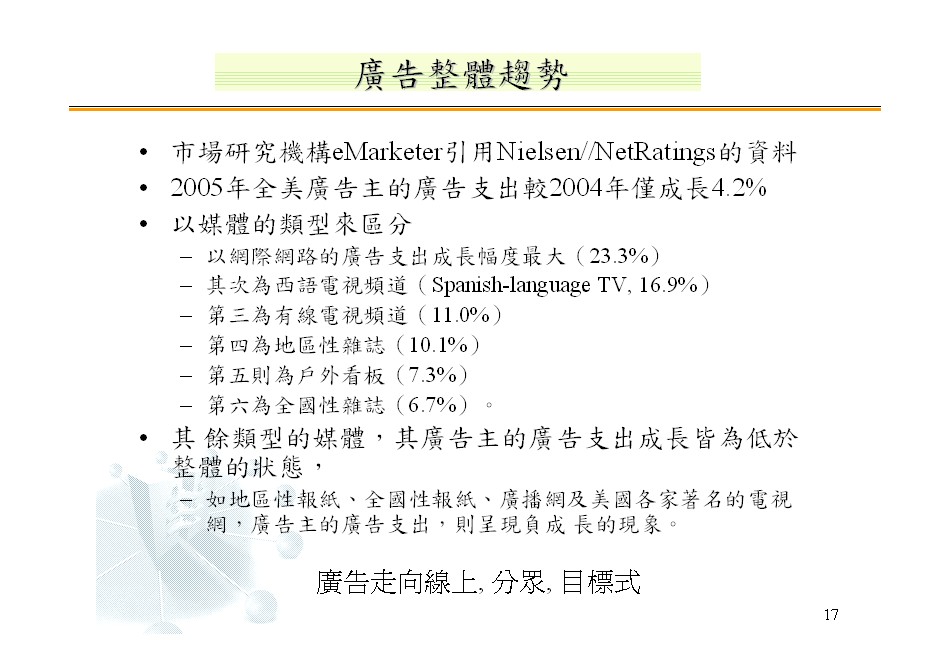
Google Ad Business Models


10/14/2006 上課內容

1. 從Youtube 看未來寬頻影音的發展

2. 討論 Blog Marketing 第二與第三章

Google Services You Should Know (and Use)

都是免費

論文全文搜尋與下載
http://scholar.google.com

在網路上直接編寫Word 和Excel
Docs and Spreadsheets

一次閱讀多個資訊源並加以過濾
Google Reader

地圖
Google Maps
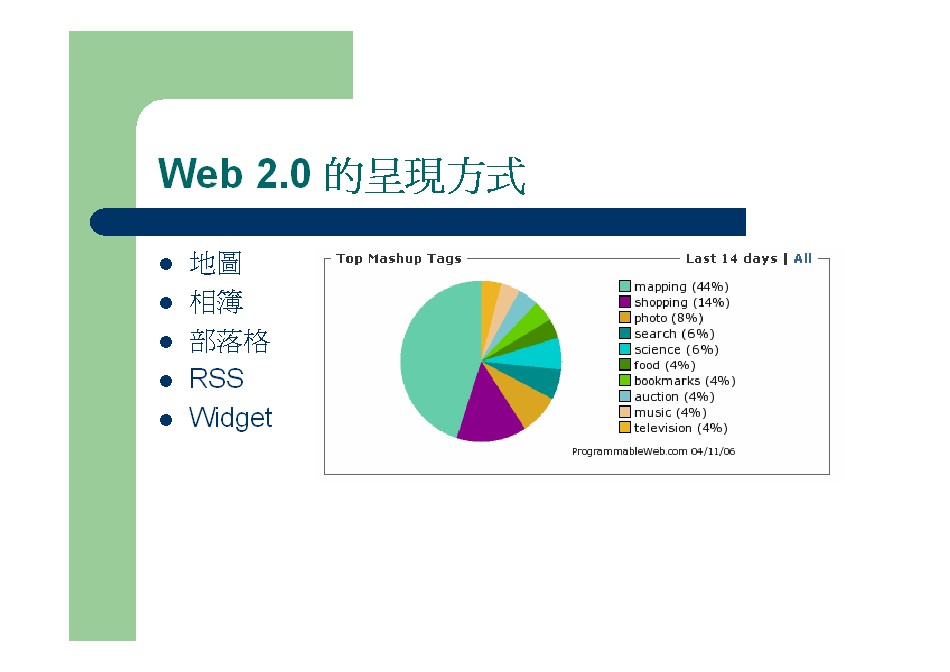
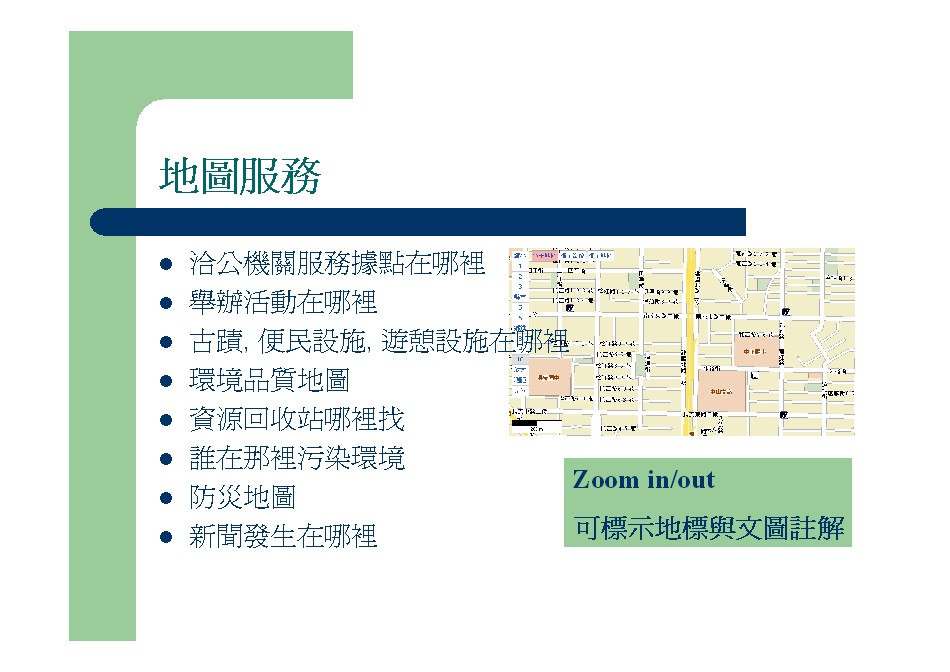
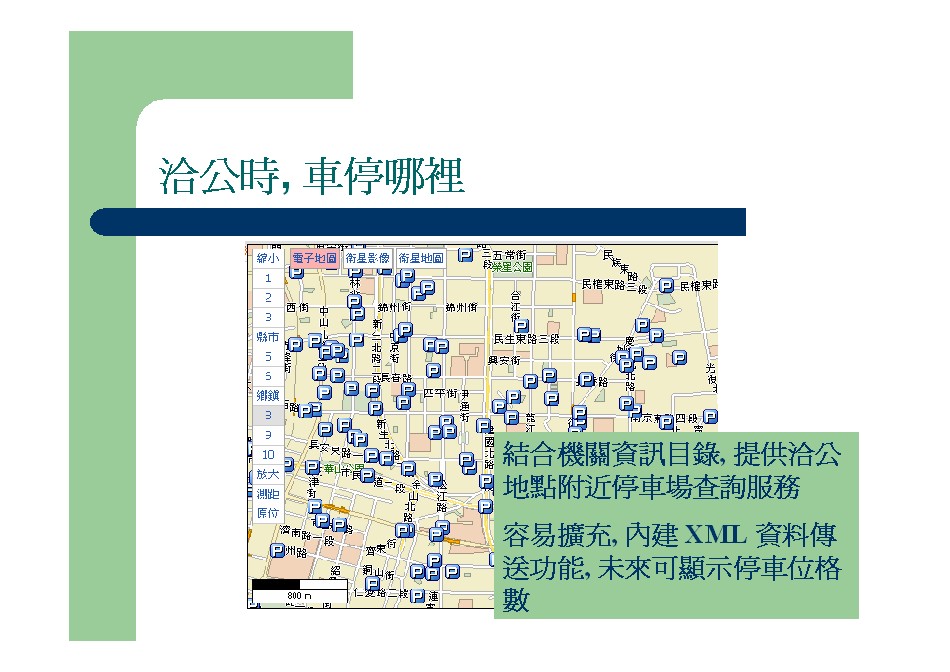
利用Google Maps作出的服務(Mash-Up Services)

星期三, 10月 11, 2006

WiMax 行動服務

可能服務內容
1. vlog, 到處拍到處看
2. 有聲書 (e.g. Dopod)
3. 行動電視 (e.g. Sharp, Samsung)
4. U-Care (國家政策)

星期六, 9月 30, 2006

Homework 9-30-2006

繳交期限 10/14 下午 1:00 整

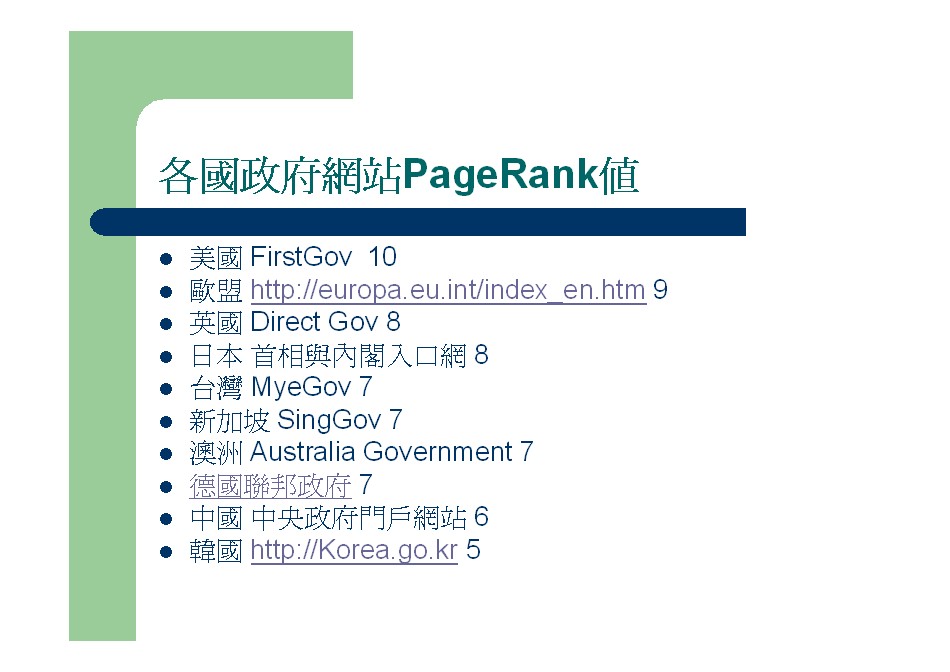
1. 安裝 PageRank , 然後使用 PageRank 量測以下網站的 PageRank (0~10分)
美國 FirstGov
英國 Direct Gov
日本 首相與內閣入口網
台灣 MyeGov
新加坡 SingGov
澳洲 Australia Government
中國 中央政府門戶網站
韓國 http://Korea.go.kr

2.
Moodgrapher plots the mood levels reported by LiveJournal users in their posts.
  • Use Moodgrapher to compare the "happy" mood level versus "sad" during the period from 9/1/2006~9/30/2006.
  • Can we justify that people drink more during the weekends?
3. Read JONATHAN SCHWARTZ, Sun CTO's Blog. Do you think his blog is authentic, honest, and authoratative? Why?

使用 Firefox 瀏覽器

有同學反應使用 IE 6.0 進入課程部落格, 網頁呈現緩慢, 我測試後的確如此, 因此建議大家
使用 Firefox, 目前版本 1.5 版, 情況應該會大為改善.

Update 10-13-2006
Firefox 2 Release Candidate 2, released Oct. 7, 2006.
It is way faster. Looks nicer.

Student Presentation

本表已經更新, 前往新時間表

9/30 林志龍(PageRank) ,鄧富明(c1)
10/14 陳炯銘(c2) ,蕭燦良(c3)
10/21 廖泰成(c4) ,連家良(c5)
10/28 李杰修(c6) ,康盈堃 (c7)
11/4 林志興(c8) ,蔡奇峰(c9)
11/18 廖得佑(c10) ,余怡璇(c11)
11/25 莊育嘉 ,徐欣佑, 建年
12/2 陳秋慧 ,蔡士楷
12/9 黃鈞蔚 ,朱衍印
12/16 簡里安,黃仁昆
12/23 陳建富 ,陳昶豪
12/30 宋懷遠 ,Hanks
1/6 洪孟揚, 黃兆平

Each presentation is 15 minutes plus 15 minutes Q&A, a total of 30 minutes.

星期六, 9月 23, 2006

Homework 9/23

1. Watch the 10 minute video clip Beyond the Mobile Frontier by NTT DoCoMo. List, from your point of view, 10 scenarios of what's next technology come into our life.

2. Read Chapter 1 of Blog Marketing.

繳交作業方式

文字式作業原則上使用 Blog: 請至 http://www.blogger.com 申請, 請以你的學號 (s/g開頭) 申請免費帳號。主旨欄請用格式 "作業一" 以加速助教登錄作業成績。

請將你的作業寫在你的 blog, 然後到
Homework 1 的Comment 登錄作業blog網址就可以了.請參考範例.
請勿將作業直接寫在 comment

注意事項
  • 留言顯示驗證詞
  • 正確設定時區顯示時間
  • 測試他人可否留言(comment)

Andy Lark's "The Web vs. Blogging"

Andy Lark's "The Web vs. Blogging"
that contrasts the world of blogs with the traditional websites. He compiled the following comparison list to show the deifferences.

Web= Organized Blog=Chaotic
Web=Predictable Blog=Unpredictable
Web=Find Blog=Browse
Web=Comprehensively Blog=Imcompletely Deep
shallow
Web=Broad Blog=Niche
Web=Slow Blog=Instant
Web=Cold Blog=Warm
Web=Transmission Blog=Conversation
Web=Place Blog=Community
Web=Annonymous Blog=Personal
Web=Company Blog=People
Web=Content Blog=Expression
Web=Cookie Cutter Blog=Individual
Web=Closed Blog=Participatory
Web=Unresponsive Blog=Give Thanks

星期六, 9月 09, 2006

研究生求生手冊

(最近更新 05/31/2013)


我編輯了一些給研究生看的資料,要是我是一個研究生, 我大概也會希望我的指導教授可以早些告訴我這些事.

做好研究,其他自動會來
加強寫作能力
研究工具


研究生涯如何規劃
準研究生大四寒假/春季
暑假
  • 參加生活體驗營,進行精障工作者田野活動
  • 練程式
  • 閱讀研究文獻
  • 投稿TANET會議
研一
  • (開學)後參加TANET會議
  • (期中考後)有興趣者,挑選下學期要帶的大三專題生
  • 年底協助老師撰寫國科會計畫
  • (寒假)前帶領新進專題生
  • 協助大三新專題生申請大專生國科會計畫
  • 參加生活體驗營,進行身心障礙工作者田野活動
  • (第二學期)五月參加本校三創比賽
  • 六月參加本校服務學習比賽
  • 六月確認研究題目
  • 七月投稿ACM SRC競賽
  • 七月~ 九月 進行初步研究
  • 八月投稿初步成果,確立實驗計畫
研二
  • 十月發表研究成果TANET/NST
  • 十月參與ACM SRC競賽
  • 十一月參加全國競賽
  • 有興趣者,挑選下學期要帶的大三專題生
  • 年底協助老師撰寫國科會計畫
  • (隔年)三月前完成所有實驗
  • 四月提論文口試申請,*必須有公開發表論文才可以提出申請*
  • 五月撰寫論文
  • 六月口試
  • 七月修改論文,畢業離校
與指導老師 meeting
  • 論文閱讀心得
  • 近日研究進度與遭遇問題
  • 創新創意點子
  • 其他需要老師指導事宜
  • meeting前先將你的研究記錄,資料,讀過論文,記事,實驗數據...寄給老師預習一下
修課建議

  • 自閉症的研究是目前很需要有人去做的領域,因為自閉症盛行率近年來變得太高了,已經超出既有障別(智能,認知,唐氏,肢體),所以我很鼓勵各位選修林初穗老師的自閉症專題研究。  
  • 研一下林初穗老師會開單一個案研究設計(Single Case Design),也是對我們非常重要的一門課,對特教與身心障礙研究是不可或缺的。

閱讀論文
  • 研究所期間至少閱讀30篇英文論文,並且寫入碩士論文reference 算起來一個月閱讀1.25篇,很低的門檻。 老師每個月至少閱讀10篇論文。
撰寫論文
  • 整體來說,研究生論文常見問題是學術性與技術性仍嫌不足,看起來像大學生的報告。
  • 具體改善建議
    1. 能否以演算法角度描述

    2. 能否使用科學流程圖(注意: 系統示意圖並非流程圖)

    3. 能否引用與該論文密切相關的文獻
  • 其他常見問題
  1. 結論不可引用文獻,如果有文獻要介紹給讀者,應該要在論文結束以前。結論應該就只是總結,把一篇文章的重點與貢獻做個結語,不應該再引入新文獻。
  2. 結論到底你該寫些甚麼呢

    你的研究發現了甚麼,產出了甚麼,做出了甚麼貢獻
    用最精簡易懂的方式講清楚

    應該扣聯你實驗結果最精彩的部分,最後來個畫龍點睛,嘎然而止,回味無窮。

    最忌諱
    1. 扯一些跟論文無關的事
    2. 過度誇大療效
    3. 炒冷飯(前面講過得又講了一次)
    4. 出現新的名詞,新的概念,出現前面沒有提過的東西
撰寫計畫書

基本上
我們要寫出我們計畫將是一個新的里程碑,走在別人的前面
因此你必須總結世界上已經做到哪裡
目前研究缺點有哪些
不要只提就服員用圖卡,文字,這不重要,因為就服員不是做研究的

想一想
我們將突破哪些難關
創造哪些新的亮點
對世界的貢獻在哪裡

講得清楚,人家才會給你經費

要把格局放在世界的高度
不要侷限在周遭所見

寫計畫要這要寫
寫論文也是一樣
參加SRC更是如此
做研究更是如此

A List of Some Mobile Social Software

sites that use google maps
http://minstral.blogspot.com/2006/04/sites-that-use-google-maps.html
http://minstral.blogspot.com/2006/03/some-applications-of-google-maps.html

Positioning Software
http://minstral.blogspot.com/2006/03/positioning-software.html

Papers about wireless networks applications on social network services
http://minstral.blogspot.com/2006/03/papers-about-wireless-networks.html

WiFi/Cellular Roaming
http://minstral.blogspot.com/2006/03/wificellular-roaming.html

Syllabus of Advanced Internet Applications 2006

About Professor YJ Chang and Applied Networking Lab

Grading Policy
Participation (Presence, Challenging and Answers, & Oral Presentations) 60%,
Homework 40%

Style
Our class is more of a conversation and dialogue than a lecture.

Textbook

  • Jeremy Wright, Blog Marketing, McGraw Hill, 2006

  • Y. J. Chang, Handouts of Advanced Internet Applications. Unpublished, 2006
Reference
  • Social Capital and Information Technology
學期課程

1. Trends of Internet Applications and Business models

Trends of Networking
Beyond the Mobile Frontier by NTT DoCoMo
Blogging, Search Engine, Broadband Video, Peer to peer,

2. Search Engine

PageRank, Personalization
Business Models

3. Blogging

Blog vs. Web
Why Blog?
Things to learn with Blog
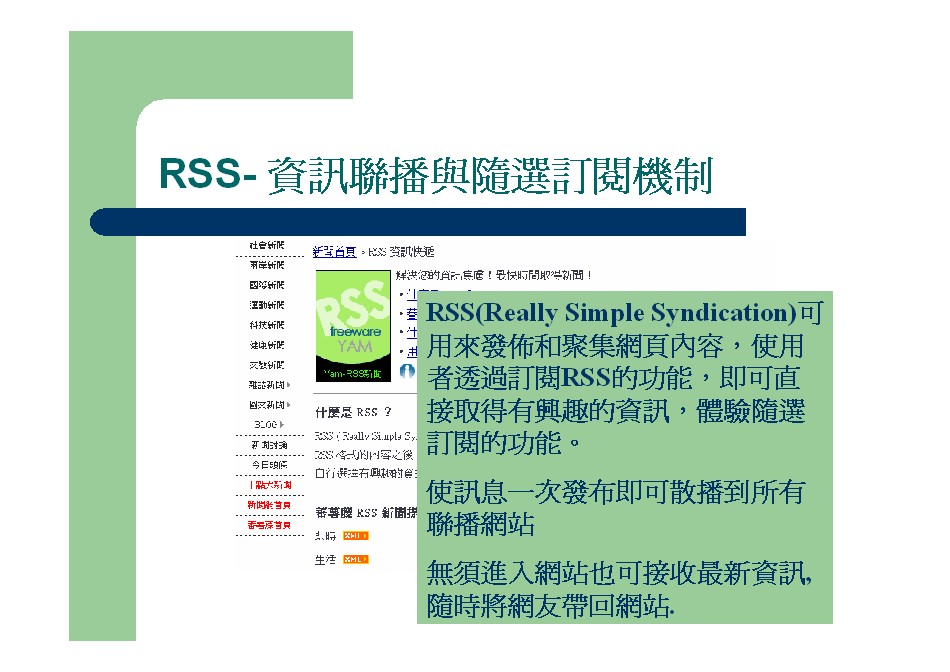
XML, RSS, Syndication
Blogging for Business Marketing
Blogging for Internal Communication
Blogging for Project Coordination, Basecamp
Blogging for Learning

4. Mobile Social Software

A List of Some Mobile Social Software

Tracking methods: Dodgeball and Navizon

Friends finding friends
: Dodgeball.com

The Buddy Tracker in Navizon

繳交作業

文字式作業原則上使用 Blog: 請至 http://www.blogger.com 申請, 請以你的學號 (s/g開頭) 申請免費帳號。主旨欄請用格式 "作業一" 以加速助教登錄作業成績。

請將你的作業寫在你的 blog, 然後到
Homework 1 的Comment 登錄作業blog網址就可以了.
請勿將作業直接寫在 comment

注意事項

* 留言顯示驗證詞
* 正確設定時區顯示時間
* 測試他人可否留言(comment)


智慧財產

如果你的作業引用他人文章, 務必註明出處或是網址, 以示尊重他人創作.

研究建議

Scholar Google is one of the best tools for searching academic papers.
You can find a lot of good references in the areas that you feel interested.

簡報製作

如何做好一個簡報投影片, 請參看簡報製作原則

How to do research, by Tzi-cker Chiueh

同學對這門課的評語

update:

星期二, 9月 05, 2006

研究團隊

2013. 1. 7


研究生手冊

碩士生

研一
  • 邱俊嘉
  • 阮筱琪
  • 陳聖融
研二
  • 呂紹廷
  • 呂坤隆
2016
  • 高嘉駿
研四
2015
2014
2013 級
2012 級
2011 級
2010 級
2009 級
2008 級
2007 級
  • Fisher 
  • 善堯
2006 級
  • 時定樑 

大學部


2012 夏天


2010 秋天

更新日期: 2014,3

星期六, 8月 26, 2006

How blogs are Changing the Way Teachers talk with their Students

One of the teaching challenges in computer-based laboratory is tracking student progress and giving assistance on an individual basis in the lab classroom. Designing specific systems to serve this purpose can be tedious and take great efforts. In addition, traditional web-based tools that help administer a course often store student works in a class-centric fashion. Once the class is closed, student materials may not be accessible to the students themselves any more.

Blogs have been used on campus for vastly diverse purposes. They are often seen as web publishing tools and social networking vehicles. Postings, tracebacks, and comments in the blog computing model usually happen without timelines in mind. Blogs interact with each other in a loosely coupled fashion as relations among blogs are usually nothing more than URL links or RSS subscriptions.

As a solution to the teaching challenge that the author has been wrestling with for years, blogs have been used in a novel fashion for three consecutive semesters at two hands-on computer lab classes, namely Java and Internet Applications, respectively. Our approach sees blogs from a more responsive point of view, and has them serve as catalysts for in-classroom student-instructor interactions.

First of all, the instructor creates a blog for the lab class at the outset. Every student of the class is required to create a blog for the lab when the semester begins. Instructor blogs are for posting lab materials in the curriculum and making announcements to the class. So they deliver lab sheets and hand-outs in electronic version. When finishing a lab, students are asked to submit their results at their own blogs and make a notice by placing a link at the instructor's blog right under the lab. Pursuing the links and checking out students' blogs, the instructor can grasp better immediate understanding of student progress such as how many have finished labs, how good the quality of the results is and what problems may have occurred. The blog is so responsive that instructors can make quick judgments on which students to walk by and initiate further interactions with. Through blogs, this can be done without students leaving their seats or even raising their hands, reducing interferences to others who may be still busy working on the lab. Reading the student blogs, the instructor has better chances to get better prepared before approaching them.

In this study, student feedback is collected and behavior patterns analyzed. Using blogs is found to simplify the tasks of reducing piracy. The tactics to prevent students from pirating in our study is by time stamping the lab works and making them public on the web as soon as possible. Blogs by design serve such a purpose. Anyone that pirates risks being caught by the instructor as well as virtually every other student in the class. We also have success with seeing students learning from peers through blogs. Traditionally, students turn in their works to instructors and have no easy way to learn how their peers achieve on the same assignments. By browsing the comments made by instructors on students’ blogs and the selected peer works, students have better chances to stimulate new ideas to be different from each other. The study shows students who took the lab courses are satisfied with turning in lab results through blog posting, getting instructor's walk-by interactions, piracy reduction, and learning from peers.

Keywords: Teaching with Technology, Blog.

How Blogs are Changing the Way Businesses Talk with Customers

Subtle

JONATHAN SCHWARTZ, Sun CTO's Blog

Less Subtle

王心凌部落格 Cyndi With U

Motorola

克蘭詩

亞培

星期三, 8月 16, 2006

國科會計畫: 結合無線定位技術之行動義工社會網路

社會網絡是由個別的人或專業群集間的關係連結而成,社會網絡也代表著這些連結的集合與彼此連結的強度。過去社會網絡研究通常在少許的參與者中進行,然而透過人手一機的手持裝置,加以位置資訊的應用,使得大範圍的社會網路研究可以實現。 應用此項技術於社會網絡上,求助者可以獲得及時且就近能夠提供幫助的人的位置資訊並請求協助。

結合資訊、電機、心理、社會福利政策、職能治療、管理等專業人才,本團隊致力於可應用在精神障礙者與成長遲緩兒之行動式關懷與非營利科技。近ㄧ年的努力,跨領域研究團隊於精障者就業輔導系統、認知障礙者導航、無線行動等技術已累積多項國際頂尖的研究成果,並於2007年獲得ACM SIGACESS 研究競賽獎項。本計劃網站請參閱計畫部落格

相關聯結
媒體報導
學術著作
獲獎榮譽
服務學習

星期六, 8月 12, 2006

歡迎研究生使用 Applied Networking Lab

歡迎研究生使用 Lab 517, 目前空間仍多, 請多加利用.
另外最近剛剛加裝大噸位冷氣.
上網方式可分為有線與無線. 如使用有線, 目前 Lab 517 已經有
switching hub, 但須自行設定 IP.
如使用無線, 目前已經架設 EDIMAX 無線 AP, 速度為 54 Mbps,
因為內建 DHCP, 連線時無須設定電腦 IP, 即插即用.

星期四, 7月 27, 2006

Students, skype me

我的帳號是 chang212
歡迎與我 Skype, 建議你先 email 跟我約時間, 這樣我可以
先準備一下, 例如看看你給我的資料.
當然, 如果你要試運氣, 也歡迎直接 Skype 我.
我星期一晚上有課, 其餘晚上都可以約看看. 星期天白天也可以.
以不影響各位工作為原則.

Journal Info: Electronic Commerce Research and Applications

http://www.elsevier.com/wps/find/journaldescription.cws_home/621289/description#description

Journal Info: International Journal of Electronic Business

http://www.calpoly.edu/%7Eeli/iceb/IJEB/

「電子商務學報」徵稿說明

http://jeb.cerps.org.tw/

四份主要的電子商務國際期刊

  • International Journal of Electronic Commerce,
  • Electronic Commerce Research;
  • Journal of Electronic Commerce Research,
  • Quarterly Journal of Electronic Commerce

星期日, 6月 25, 2006

張耀仁簡歷 Yao-Jen Chang


連絡電話 (03) 265 4630
辦公室 教學大樓 512
實驗室 電學大樓 517
電子郵件 yjchang at cycu dot edu dot tw
電子系個人網頁
Claude profile
適合指導的學生類型


張教授研究發表於IEEE Wireless Communications, IEEE Transactions on Information Technology in Biomedicine, Research in Developmental Disabilities, Journal of Applied Research in Intellectual Disabilities 等重要學術期刊,至今已發表超過39篇期刊論文,其中35篇為SSCI、SCI期刊論文。(One Page Research Highlights)

張耀仁老師在Google scholar的統計上已經超過3700次的論文引用,特別是在主要研究領域 Kinect (體感復健科技)的論文引用次數世界排名第一

 張耀仁教授致力於身心障礙輔助科技,開創了體感科技在身心障礙的運用,該篇論文自2011年在Research in Developmental Disabilities 發表以來,至今已獲得1300次以上的引用。張教授於 2010年獲得ACM無障礙科技小組SIGACCESS邀請撰寫專文,為ACM自1994年成立SIGACCESS以來第一位也是唯一獲邀的台灣學者。張教授並於2009年與2012年帶領研究生前往美國參加ACM無障礙科技競賽,兩次獲得全世界第三名殊榮。

張教授  近十年主持國科會計畫17件,並曾擔任感測科技整合型計畫總主持人。在國際學界表現活躍,曾擔任International Journal of Distributed Sensor Network編輯,ACM/IEEE等七個國際會議議程委員,同時審查Personal and Ubiquitous Computing等二十個SSCI/SCI期刊。2025年獲得美國 ACM 主辦無障礙科技會議ASSETS邀請擔任議程委員,這是27年來第一次有台灣人進入這個全世界最大的身心障礙科技組織委員會。

2009~2012連續三年擔任中原大學電算中心主任,推動校內多項創新資訊服務,包含客服中心1999專線,導入國際軟體成熟度規範(CMMI ML2),帶領電算中心通過ISO27001國際資訊安全驗證,連續六次獲瑞士商SGS評定為零缺失通過,領導卓著獲得台灣學術網路管理委員會肯定,於2011年十一月獲得TANET傑出人員,協調能力與執行力俱佳。

2017年以影像辨識技術應用論文獲得教育部主辦的TANET2017會議最佳論文獎,2018年再次以身心障礙科技研究成果獲得TANET2018最佳論文獎。

張耀仁教授的研究領域包括體感科技、福祉科技、學習科技、社會包容,近年在研究上的主要貢獻為應用體感科技/擴增實境於身心障礙支持性就業,協助社會工作者提升身障學員就業服務。

張耀仁因為在助人科技專業上的表現, 分別於2015,2021,2024 獲選為中原大學特聘教授。

現職
經歷
  • 中原大學特聘教授(2015/8~2018/7,2021/8~2024/7,2024/8~2027/7)
  • 中原大學電子系主任(2014/8~2020/7)
  • 中原大學電子工程學系教授(2010~)
  • 中原大學計算機中心主任(2009~2012)
  • 蕃薯藤(Yam.com)數位科技協理 (2000~2002, 2002~2004 中原大學借調)
  • IBM 亞太區電子商務顧問 (1997~1999)
  • 中原大學電子工程學系研究所專任副教授(1995~2010)
  • 美國伊利諾大學香檳校區電機與電腦工程系客座助理教授(1993~1995), supervised by Professor Benjamin Wah
學歷
  • 美國伊利諾大學香檳校區電機與電腦工程系訪問學者(1992~1993), supervised by Professor Benjamin Wah
  • 台灣大學電機博士班 1989~1993
  • 台灣大學電機碩士班 1988~1989
  • 台灣大學電機系 1982~1986
研究領域
  • 身心障礙者科技輔助科技
專業組織
榮譽
  • 教育部 服務學習全國績優教案(2017)
  • 教育部 第一屆 服務學習全國績優教師(2014)
  • 中原大學113年度全校教學特優教師(2025)
  • 中原大學101, 102, 103, 104年度教學特殊優秀教師獎勵
  • 國科會100, 101, 102, 103, 104, 105, 106...年度優秀人才獎勵(12次)
  • 中原大學101, 102, 103,104, 105, 106年度服務特殊優秀教師獎勵
  • 中原大學 服務學習特優教師 (三次獲獎最高榮譽, 2009, 2012, 2015)
  • 指導學生團隊榮獲教育部101年,102年度區域和平志工團績優團隊競賽「科技服務類」全國第一名
  • 指導研究生魏子崴參加由ACM主辦的2012無障礙科技大賽,獲得世界第三名
  • 帶領學生參加2010第15屆大專校院資訊服務創新競賽,以身心障礙者福祉科技獲得整合應用組全國第一名。(2010)
  • 教育部特優社團指導老師獎 (中原登山社)。
人才培育
  • 研究生畢業多年後擔任跨國與本國公司CEO或任職中華電信,IBM等國內科技公司高階主管或經理
人才培育計畫
媒體報導


張耀仁老師生涯軌跡(1995~)


張耀仁研究計畫

  • 計畫名稱 計畫內擔任之工作 起訖年月 補助或委託機構 執行情形 經費總額
  • 綠色採購網建置與維運 共同主持人 6/2005~12/2005 行政院環保署 已結案 720,000
  • 衛生保健便民網站維運 主持人 1/2005~12/2005 行政院衛生署 已結案 5,940,000
  • 無線寬頻示範應用計畫(台南縣) 主持人 11/2004~12/2004 經濟部工業局 已結案 2,750,000
  • 無障礙服務入口網站委外建置案 主持人 6/2004~11/2005 僑委會 已結案 4,000,000
  • 政府入口網"我的e政府"計畫 共同主持人 5/2004~12/2004 行政院研考會 已結案 2,933,000
  • 電視妙管家網站計畫 主持人 12/2003~6/2004 行政院新聞局 已結案 1,260,000
  • 衛生保健便民網站建置 主持人 11/2003~12/2004 行政院衛生署 已結案 9,900,000
  • 無線寬頻示範應用計畫(台北縣) 主持人 9/2003~2/2004 經濟部工業局 已結案 10,780,000
  • 多媒體資料中心建置計畫 共同主持人 7/2003~11/2003 國民健康局 已結案 4,118,000
  • 兒童環保教育網站 主持人 3/2003~9/2003 行政院環保署 已結案 1,380,000
  • 教育入口網 共同主持人 3/2003~7/2003 台北市教育局 已結案 9,190,000
  • 整合型運動入口網計畫 共同主持人 10/2002~12/2005 行政院體委會 已結案 21,000,000

著作

(vitaes of Yao-Jen Chang)(英文學術著作)

期刊
會議
Books
  • 1. 張耀仁,電子商務系統,高立圖書公司,2001年1月。ISBN 957-584-624-9
Articles
  1. 張耀仁, 對抗垃圾郵件大作戰, 消費者報導, 300 期, 民95.04 頁24-29
  2. 張耀仁, 網路電話 搶便宜, 消費者報導, 287 期, 民94.03 頁47-50

星期六, 6月 17, 2006

Trends of Networking

ADSL -> FTTH
802.11 a/b/g -> 802.11n
3G -> HSDPA (3.5G) -> 4G, WiMax
CD -> Paid Music Download
DTV, IPTV, DVB-H
VoWiFi
Wireline Phone -> VoIP

手機上網 vs. 電腦上網

日本經驗

依據日本總務省最新公布的「通訊利用動向調查」顯示,2005年底日本上網人口高達8529萬人,其中透過手機上網人口達6,923萬人,首次出現超越電腦上網人口(6,601萬人),成為日本最主要的上網終端設備。

使用手機上網者,主要從事的活動有「與公司或朋友透過如E-MAIL方式連絡與資訊交換」(69.5%)、「下載數位音樂內容」(26.2%)、「瀏覽新 聞及氣象資訊」(25.1%)。而電腦上網者主要從事的活動則是「取得商品、服務、企業及商店的資訊」(55.4%)、「與公司或朋友透過如E-MAIL 方式連絡與資訊交換」(54.4%)及「瀏覽新聞及氣象資訊」(50.2%)。二者差異在於手機上網主要仍是以通訊功能為主導,而電腦上網則以資訊取得為 主。

南韓經驗


南韓行動上網普及率高達四成三

手機鈴聲下載為南韓行動網路內容中,最受歡迎的項目,有96.8%的行動上網者透過行動網路下載手機鈴聲;其次為下載音樂(45.4%);再其次為照片上 傳/下載(42.1%);第四則為遊戲(37.1%);第五則為收發電子郵件(20.6%)及資料查詢(19.9%)。而其餘服務項目的使用比例則皆低於 一成五。值得一提的是,有關金融交易、股票投資交易或行動購物/訂位的使用比例,僅6.4%、3.4%及4.8%,顯示南韓行動網路內容中,行動商務或交 易尚不普遍

星期四, 6月 15, 2006

Update on City-wide Wi-Fi Networks

<full story>

1. Municipality planned networks (both wired and wireless) in cities and towns in the United States will probably only reach about six million people within the next five years.

2. Most city-wide networks are farmed out to third-parties that pay for the deployment and management.

3. Free access translates to showing advertisements. Setting up an effective ad-sales operation is costly, which requires even more money (a lot of it, actually) and also lots of expertise.

4. Maintenance problems of citi-wide Wi-Fi netowrks in the example of Chaska, Minnesota. Backbone upgrade and AP upgrade to 11g are both costly as the first installation. Operation is another issue.

5. Wireless isn't the first thing incumbents think of when they consider expanding their footprint," "They do cable."

6. Even with close to 200 metro-scale networks in the U.S., most are in small cities and towns. Not a single big city has deployed a city-wide network yet, not even Philadelphia.

星期五, 6月 09, 2006

June 10, 2006 Class

  • Wi-Fi Community Network and Business Model <fon>
  • Mobile Phones for Advertising <ZagMe>
  • Ad Hoc Wireless Network
  • Test Design of Mobile Phones

星期六, 5月 20, 2006

Vision 2010

Beyond the Mobile Frontier by NTT DoCoMo

4G

4G communication at 100 Mbit/s while moving, and 1 Gbit/s while stationary.

Pervasive networks
  • simultaneously connected to several wireless access technologies (Wi-Fi, UMTS for example) and can seamlessly move between them (handover)
  • smart-radio aka cognitive radio technology to efficiently manage spectrum use and transmission power
  • mesh routing protocols
  • 4G may use OFDM , and also OFDMA.
  • packet switching only
In general, a generation is defined by the result of technology changes over a 10-15 year time frame. Thus, 4G would refer to whatever is deployed in the 2010-2015 period, assuming 3G deployment spans the 2000-2009 period.

See Wikipedia 4G

星期五, 5月 19, 2006

2G, 2.5G, 3G

cellular: 2G/3G
channel bandwidth: 200 kbps (8 time slots) / 5 MHZ
multiple access: TDMA / CDMA

SMS, Short Message Service, up to 160 bytes
SMS, EMS use control channels while MMS use regular channels shared by data and voice.

Data Services
  • GSM, Circuit Switching, 9.6 (*2), 12.4(*2, HSCSD)
  • GPRS, General Packet Radio Services, Packet Switching, 9.05 kbps/13.4 kbps (*1,2,3,4), speed denoted as *u*d
  • EDGE, 3 times of speed of GPRS by using 8-PSK instead of binary GMSK
  • 3G, 384kbps, up to 2 Mbps, uplink is 128 kbps
  • 3.5G HSDPA (High Speed Downlink Packet Access) 8-10 Mbps (R5), and 20 Mbps (R6) by MIMO, uplink is 384 kbps

Worldwide deployment of HSDPA

WAP, content bearer protocol, certificate, cookies
WML, wireless markup language (or HTML-C as in i-Mode, XHTML)
MMS, Multimedia Messaging Service

Tariff
3G, GPRS vs. GSM
flat rate, data volume or air time

Security features
WIM: A Wireless Identity Module (WIM) can contain
both trusted and client certificates, private keys
and algorithms needed for WTLS handshaking,
encryption/decryption and signature generation.
The WIM module can be placed on a SIM card
and is then referred to as a SWIM card.

authentication and billing of wlan with SIM card
  • authentication
  • billing
  • coverage of both 802.11 & GPRS/3G
  • roaming across APs and WISPs
  • user base

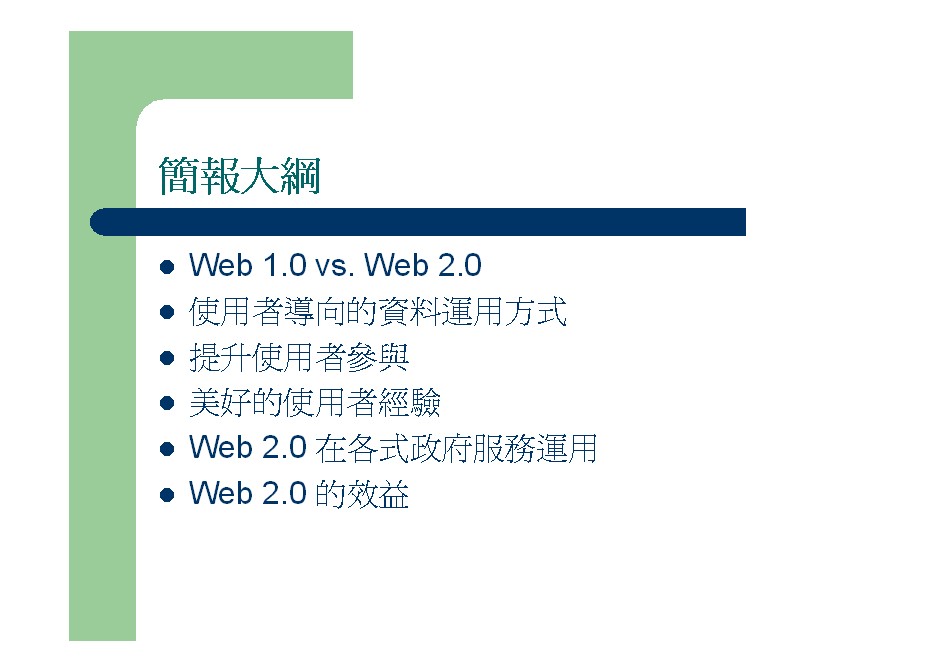
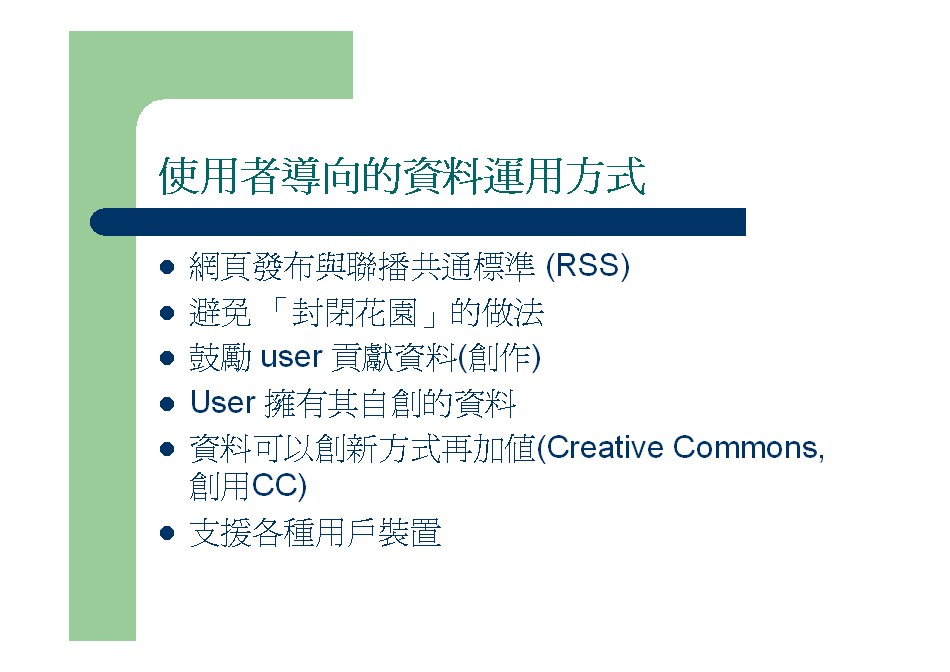
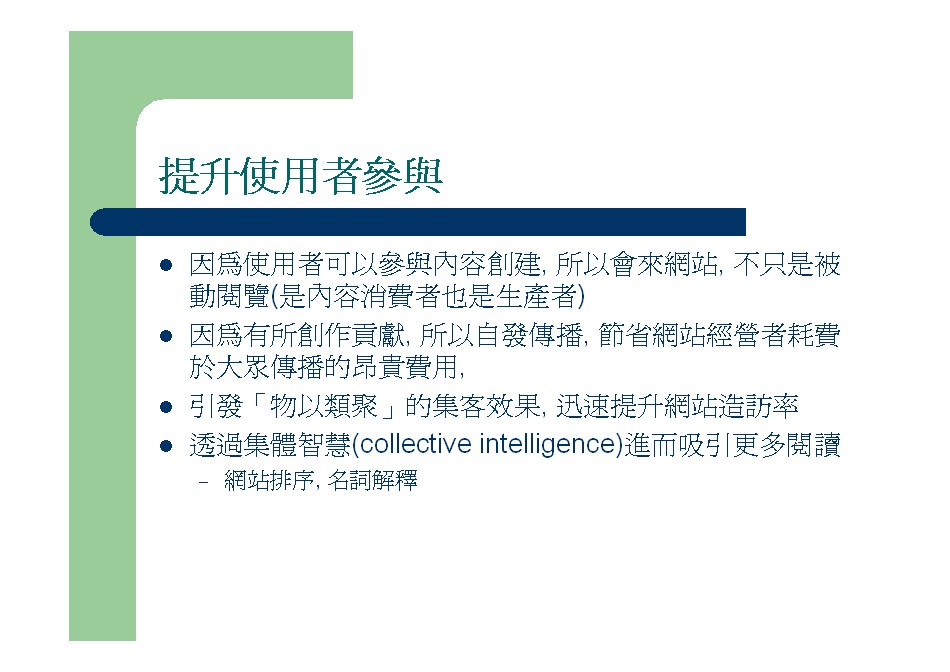
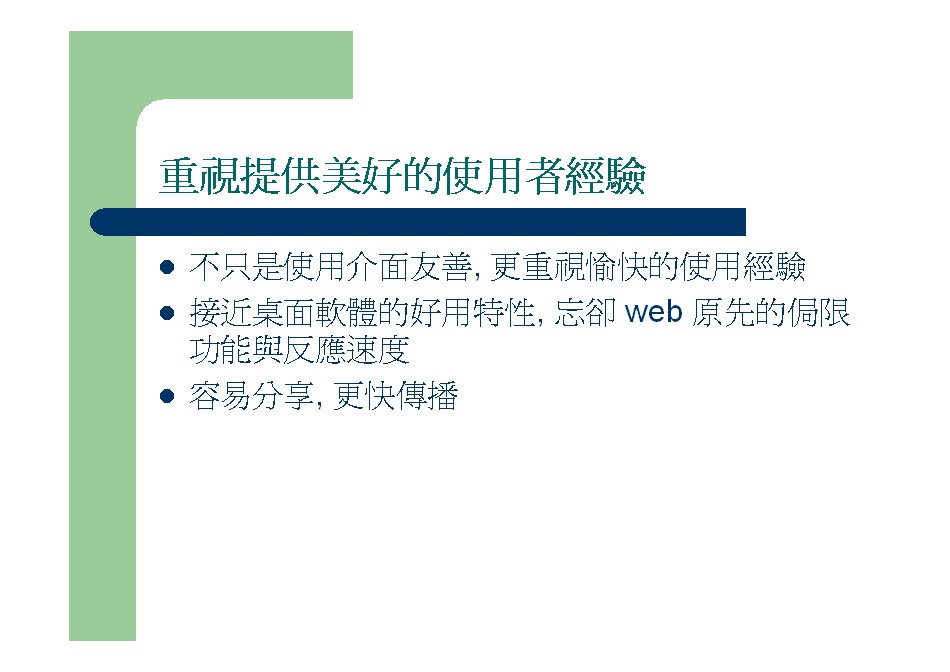
Web 2.0

What is Web 2.0? By Andy Budd of Clearleft Ltd

What Is Web 2.0 by Tim O'Reilly

知識經濟時代的農產變革: 生產履歷介紹

台灣第一條有身分證的健康魚

  • 歐盟2005年1月1日起實施食品訊息可追蹤系統(食品追蹤紀錄管理辦法),未來若食品無法提供生產履歷,將無法進入歐盟市場
  • 日本於e-Japan戰略中也已明確指出「在2010年前實現所有食品生產履歷」的目標,並於2004年12月1日起開始實施牛隻生產履歷紀錄制度。
「生產履歷」的技術問題

  • 產銷履歷源自Food Traceability,也就是食品可追蹤性,「追蹤農產品的生產至末端銷售完成的履歷過程」。
  • 資訊不對稱以及觀望心態是最需要克服的難題之一。
各國不同的生產履歷做法

星期六, 5月 06, 2006

5-13-2006 停課一次

Wireless LAN Antennas

<commercial products>

Multiradio Wireless Mesh

  • Architecture and Algorithms for an IEEE 802.11-based Multi-channel Wireless Mesh Network (A Raniwala, Prof Chiueh) in proc of IEEE Infocom '05 [pdf] [slides]
Comment:

未來研究的方向是考慮 802.11 n,
以及 VoIP 所需要的 QoS
這篇paper 裡面的演算法不適用於802.11n
因此需要新的演算法
在mesh 架構下使用 802.11n 效能應該會大有提升.
  • Centralized Channel Assignment and Routing Algorithms for Multi-channel Wireless Mesh Networks (A Raniwala, K Gopalan Prof Chiueh) - in ACM SIGMOBILE Mobile Computing and Communications Review (MC2R) April '04 issue [pdf]

Antenna Diversity for 802.11 b/g

Refer to PC Card and Mini PCI Antenna Integration Notes - group of 2 »
AD Considerations, D Tips, P Testing, OIPC Cards - 2600hz.net
... for integration into portable ICT devices (for example, notebook computers, handheld ...
one or two antennas, and possibly an antenna diversity switch. ...

星期日, 4月 30, 2006

WLAN Regulations

You can use this WLAN Link Planner for link budget, this reference for Part 15.247, and this EIRP calculator.

Installing Wi-Fi Antennas

Safety Advice- If you are mounting an antenna outdoors make sure you have fitted a lightning arrestor! The last thing you want is thousands and thousands of volts of the good stuff hitting your WLAN equipment and computer network.

Regulatory Advice - Make sure you are not exceeding the maximum power for WLAN networks. There is a limit of 20Dbi on all 802.11b equipment.

<full article>